October 09, 2026



Autumn in the UK arrives as a slow dimming. One week you are forging at nine in the evening with the doors open and the midges for company; the next you are switching the lights on at half four and noticing that the anvil feels colder than it should and everything on the tool rack has a faint bloom on it. Winter turns that mild inconvenience into a running battle with damp, rust, sulking fires and hands that will not do what they are told. None of it is hard to manage, but it wants thinking about before the first hard frost rather than after it.
Warm air carries moisture; cold steel does not. When damp air meets an anvil, a vice screw or a stack of bright mild steel that has spent the night at two degrees, the water drops out of the air and settles on the metal. That is why a single-skin metal shed with a concrete floor is so good at rusting tools. The building cools hard overnight, stays cold well into the working day, and every time you open the door you let in another load of damp air.
It feels counterintuitive to open a vent while you are trying to keep a bit of warmth in the place, but a sealed workshop is where condensation does its worst. A solid fuel forge adds water vapour as a product of combustion, and a gas forge adds more. Both add carbon monoxide, which is the part that actually matters. Keep a low inlet and a high outlet so air has a route through, and never run a forge or a gas heater in a closed space. An audible CO alarm costs little and belongs in every workshop where anything burns. If you are ever unsure about a gas installation or a burner setup, put it in front of a Gas Safe registered engineer rather than guessing.
A small tube heater under the bench, set just to keep the drawers a couple of degrees warmer than the air around them, does more good than an occasional blast of heat. Store cutting tools and punches in a closed box with silica gel or VCI paper. Wipe the anvil face, the vice screw and the hardy hole with an oily rag once a week. Do not park a length of tool steel against an uninsulated external wall; that is where the damp lives.
Layer up, but not so heavily that you cannot move your shoulders. Leather rigger gloves are fine for handling stock at the hearth, though anything loose or flapping is a poor idea around a power hammer, pillar drill or lathe, where a glove can be caught and pulled in. Keep tongs off the concrete on a rack so the reins are not freezing when you pick them up, and stand on matting or a wooden duckboard rather than bare concrete. Grit the walkway if it ices over.
A slack tub left full will freeze solid and can crack, so drain it at the end of the day. Do not be tempted to add antifreeze to a quench tank: it changes how the steel cools and it is unpleasant stuff to have flashing off in a hot shop. If you have circulation problems, Raynaud's or any condition that makes cold hands painful, speak to a pharmacist or your GP about sensible precautions, and stop and warm up if fingers go numb or white.
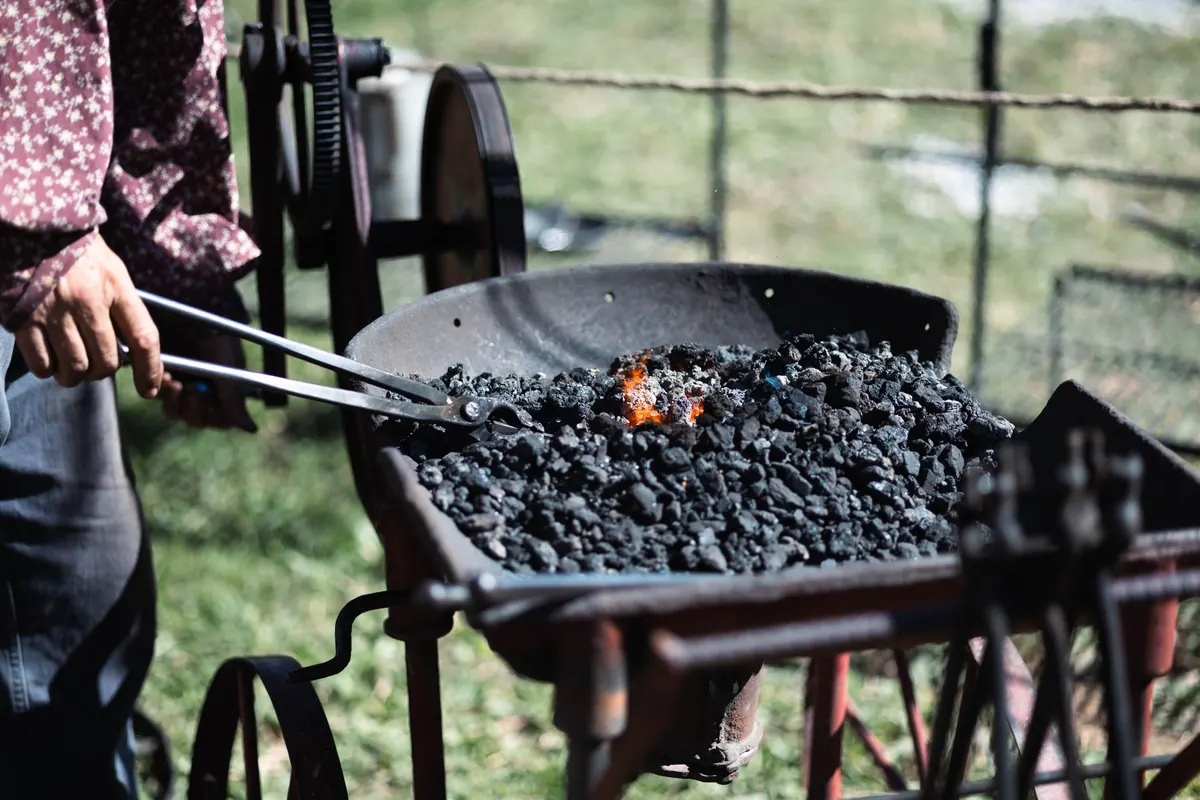
Furnace fuel wants to be dry, but it also wants air. A sealed bin holding slightly damp coke will grow condensation on the inside of the lid and the top layer will slump into a soggy crust. Better to use a lidded bin with a few small vents, raised off the floor on battens.
Store LPG cylinders outside, upright and secured, away from the forge and out of standing water, and never in a cellar or any space below ground level, because the gas is heavier than air. Cold makes old rubber hoses brittle, so check them and the regulator for cracking. If you smell gas, do not create a spark: ventilate and call your supplier.
Rack bar stock off the floor and wipe it over with an oiled rag when it comes in. Bright mild steel will rust if you look at it sideways in a damp shed.
Plan the day around the light rather than fighting it. Hot, heavy, judgement-heavy work belongs in daylight; fitting, finishing, sharpening and layout are lamp work. Task lighting beats ceiling lighting every time: a magnetic LED lamp on the anvil, one at the vice, one over the hearth. Check leads and RCDs, keep mains cables well clear of the quench area, and keep a battery light and a head torch for power cuts and the walk back to the house.
Small, precise work goes better in a cold shop if you give yourself something with a clear finish line.
Ten minutes at the end of each session saves hours in January. Rake out the fire and put ash into a metal bin, never plastic. Wipe the anvil, vice and hardy tools with an oily rag while they are still faintly warm, which is the single best rust preventative you have. Run the blower dry, drain the slack tub, and close the vents without sealing the shop tight.
Once a week, check hoses and the CO alarm, and look along the racks for the first sign of bloom on cold steel. Before the first frost, insulate or drain any external water pipe, move tool steel indoors, and sort your fuel so the dry stuff is at the front and the damp at the back. Do that, and the cold months stop being a fight and become simply a different way of working: shorter days, closer attention, and a good fire to come back to.
Photo: JillWellington / Pixabay
The magazine for blacksmiths and metalworkers.
Copyright © 2026 Forge Mag. All rights reserved. Forge Mag.