October 09, 2026


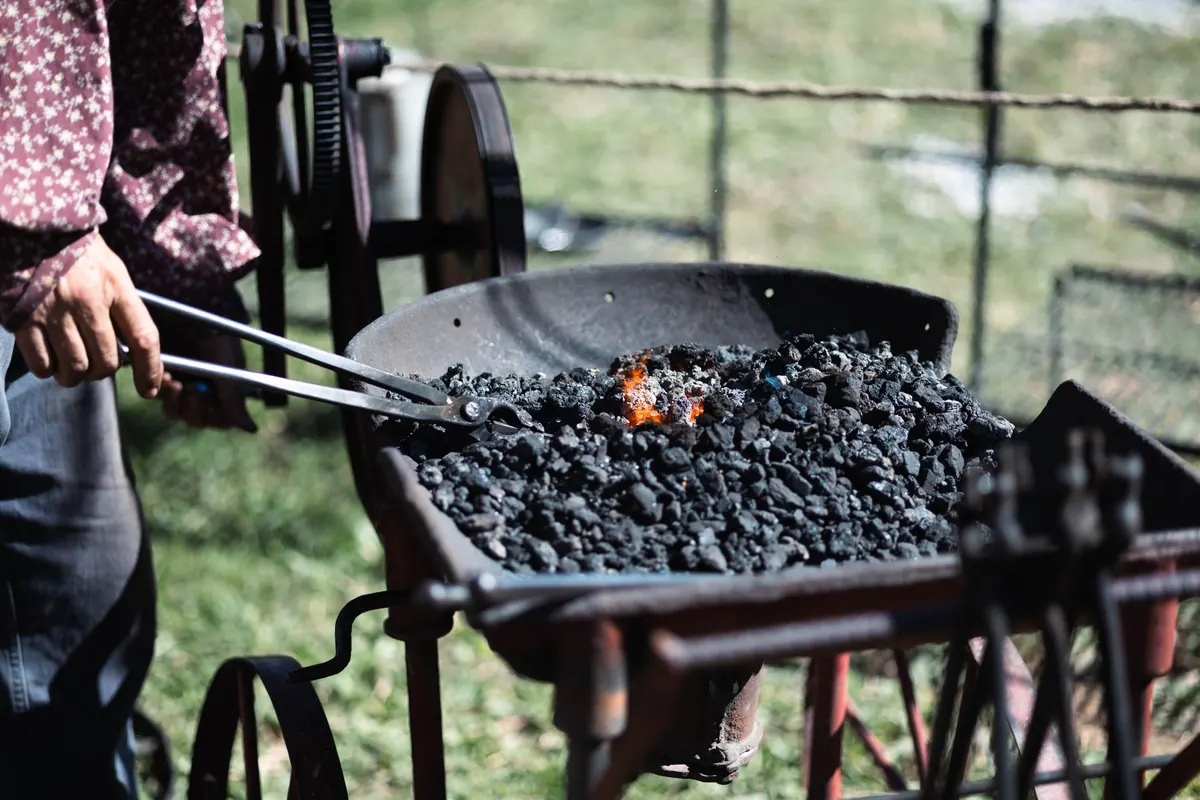
Two makers, same brief: a gate for a gap in a stone wall. One lights a coke forge, draws a taper on the end of a bar and curves it over the horn of an anvil. The other measures lengths of box section, clamps them to a bench and runs MIG welds along every joint. Both gates will hang, latch and outlive us. They will not look alike, and they will not cost the same. Understanding why is the difference between a project you're proud of and one that nags at you every time you walk past it.
Blacksmithing moves metal. Heat a bar to a bright orange and it turns plastic; hammer blows then push it into shape. You draw it down to a taper, upset it to thicken a section, punch a hole rather than drilling it, split it, scroll it, and join it with a forge weld or a rivet. Almost nothing is removed. The bar is persuaded into a new form, and the marks of that persuasion stay on the surface.
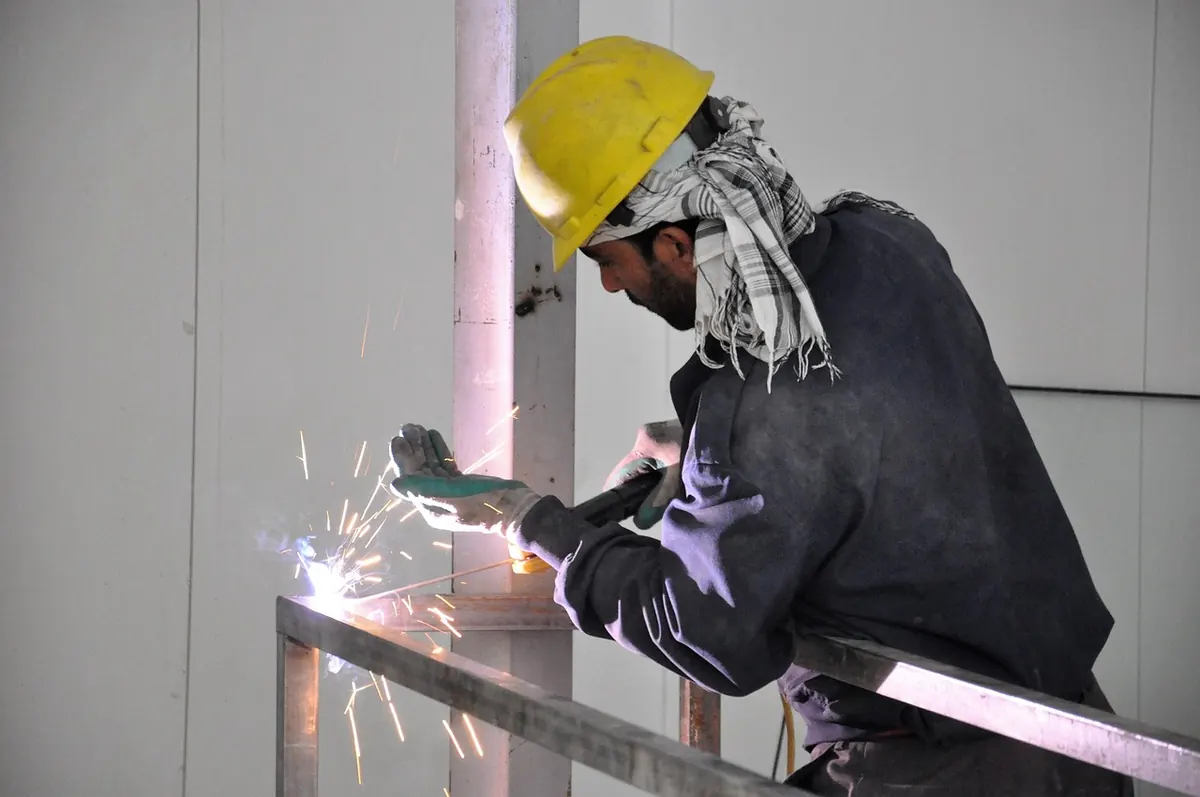
Fabrication assembles metal. Steel arrives as box section, tube, flat bar, angle or sheet, already rolled to consistent sizes. It gets cut, drilled, notched and welded, often ground back afterwards so the joints disappear. The skills are measuring, jigging, keeping a frame square and controlling the distortion that heat brings. Speed and repeatability are the point.
Most working blacksmiths own a welder and use it every day. A forged gate frame is often assembled with a few well-placed tacks, then finished with traditional joinery — tenons through the frame, peened rivets, wrapped collars — because those joints look right and can be tightened decades later. Fabricators, meanwhile, use heat constantly: oxy-propane for bending, a rosebud torch to persuade a stubborn scroll, a forge for a decorative curl.
The useful distinction is not hot versus cold, or old versus new. It is whether the form comes from the material being moved, or from pieces being cut and joined. A forged bracket grows out of a single bar. A fabricated bracket is a kit of parts made to fit a drawing.
Strength at the joints, for a start. A taper or a shoulder carries load through continuous metal, rather than through a weld bead on the surface. That is why forged work suits gates and railings that take a knock, and why a thin forged frame can look delicate while staying stiff.
Then there is the look. Forged steel has facets, slight variations in thickness, tapered ends and hammer texture that catch light differently on every bar. No two scrolls are identical, and that unevenness is the decoration. Add rivets, collars and a hand-punched hole or two and you have a piece that reads as made rather than manufactured.
Finally, forging is forgiving of awkward sites. Old walls are never square, and gates often need a frame drawn to the opening rather than to a millimetre-perfect drawing. A smith can adjust as they go — a little more curve here, a shorter leg there — without scrapping the job.
Repeatability. Twenty identical balustrade panels, a long straight run of railings, a set of cellar doors: fabrication wins on consistency and on time. It also handles forms that are awkward to forge — hollow box section, tube, folded sheet, sheet infill panels, perforated plate. Modern finishes suit it too: galvanising and powder coating are designed around welded assemblies. If you need eighty metres of estate fencing to a fixed pattern, a smith will happily build it, but you are buying fabrication with a forged flourish.
Most domestic projects do not need a decision in principle, just a decision about which parts do what. A few rules of thumb:
Hand forging is slow. Every taper is drawn out under the hammer, and labour is what you are paying for. A forged gate costs more than a welded one of similar size, and it should. What you get in return is a piece with fewer hard edges, better behaviour in a repair twenty years from now, and details nobody else has.
Finishes matter as much as the method. Bare steel needs protection: oil, wax, paint or a proper metal primer system, reapplied where it wears. Galvanising is excellent outdoors but requires drainage and vent holes in hollow sections, and it cannot be heated in a forge. Galvanised steel must never go into a fire — the zinc coating gives off harmful fumes — and welding it calls for good extraction and a suitable respirator. Check current HSE guidance before you start, and if you are unsure about any coating, ask the maker or a specialist supplier.
If you want to try the forged route yourself, start small and specific. A short course at a local forge will teach you more in a weekend than months of videos; you will leave knowing how hot is hot enough and how a hammer actually feels.
If you are commissioning instead, ask to see the joins close up and, if you can, visit the workshop. A maker who is happy to show you a rivet head or a welded corner is usually a maker worth hiring. Decide what the piece has to do, then let the method follow — that is how you end up with metalwork that still looks right in twenty years.
Photo: Charly_7777 / Pixabay
The magazine for blacksmiths and metalworkers.
Copyright © 2026 Forge Mag. All rights reserved. Forge Mag.