
November 20, 2026


Ask ten casino regulars what separates a profitable year from a donation to the house, and most will tell you it comes down to luck, a hot streak, or finally finding the right slot. Ask the small minority who actually finish the year in the black, and you will hear something entirely different: they talk about variance, bankroll ratios, and expected value the way a loan officer talks about interest rates. That mindset shift — from punter to portfolio manager — is the single biggest edge in iGaming, and it costs nothing to adopt.
This isn't a lecture about quitting gambling or chasing rainbows. It's a practical look at the mechanics behind slots, poker, betting markets, and casino table games, and how the people who last treat every session as a calculated deployment of capital rather than an evening of hopeful button-mashing.
Every game in a casino carries a mathematical disadvantage, and knowing it is table stakes for anyone serious. Blackjack with basic strategy sits around 0.5% house edge. Baccarat's banker bet hovers near 1.06%. European roulette is 2.7%, while the American double-zero wheel doubles that to 5.26%. Online slots typically range from 2% to 10%, depending on the RTP setting the operator chooses — and that last point matters enormously.
Here's where most players stop thinking. House edge tells you the long-run cost of a bet, but it says nothing about how that cost is distributed over time. A 96% RTP slot with extreme volatility might eat 200 spins in five minutes and then return three hundred times your stake on the next one. A low-volatility game with the same RTP will bleed you slowly and smoothly. Same theoretical edge, completely different practical experience.
The lesson: never evaluate a slot or a betting market on RTP alone. Match the volatility profile to your bankroll size and your tolerance for drawdowns, or the math will grind you down before variance ever gets a chance to pay you.
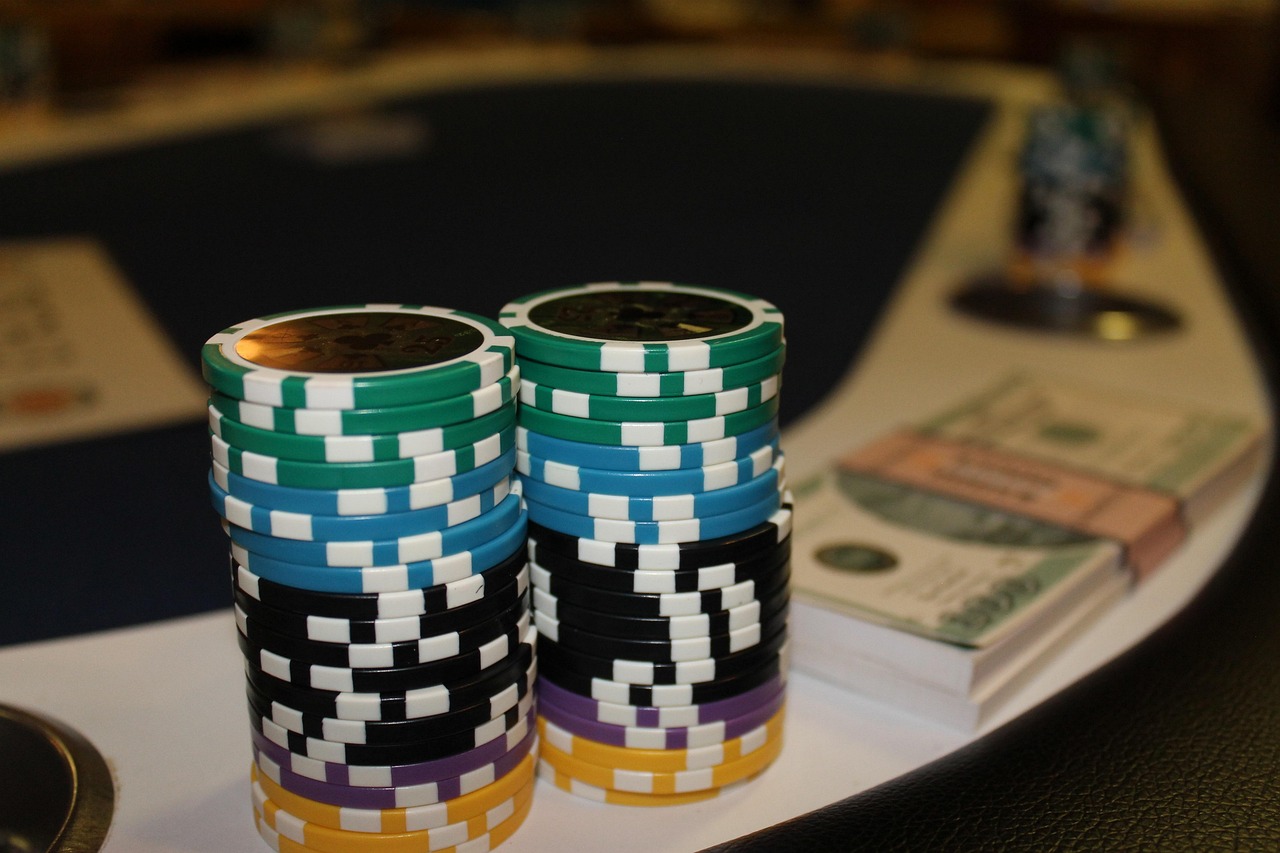
Walk through any poker room and you can spot the amateurs before the first hand is dealt. They buy in for the maximum, rebuy three times after bad beats, and leave when their card declines. Professionals do the opposite — they set strict, pre-committed limits and treat them as non-negotiable.
A workable framework looks like this:
Poker players extend this into the concept of buy-in units: 20 to 40 buy-ins for cash games, 50 to 100 for tournaments. If your bankroll can't support the stakes, move down. Ego is expensive, and it is the most common reason good players go broke.
These three verticals are not interchangeable, and the smartest players specialize rather than spread themselves thin.
Slots are a pure luck-and-math proposition. No decision you make during a spin changes the outcome. The only meaningful choices are game selection, stake size, and whether the bonus features and RTP are worth playing through wagering requirements that can range from 20x to 60x. Always check the maximum bet allowed during bonus wagering — exceeding it is the fastest way to void a win.
Poker is the opposite: a skill game with a small rake. Long-term winners exploit positional advantage, pot odds, and opponent tendencies. A player who folds 80% of hands preflop from early position will outperform one who plays half of them, because discipline in poker is literally measurable in profit per hundred hands. Studying hand ranges, tracking software, and reviewing session replays is how modern grinders turn a 5% edge into a living. Many readers start with สล็อตเว็บตรง when comparing options.
Sports betting sits somewhere between. If you bet randomly, the bookmaker's margin (often 4% to 8% on a two-way market) will bleed you dry. If you shop lines across multiple books, exploit promotions, and bet only when you have a genuine informational or mathematical edge, you can approach break-even — and occasionally better. Line shopping alone can swing your effective margin by two or three percentage points, which is enormous over hundreds of bets.
Welcome bonuses, free spins, and reload offers are the closest thing to a genuine edge in casino play — but only if you do the arithmetic. A 100% match bonus up to $200 with a 40x wagering requirement on slots means you must bet $8,000 before withdrawing anything. At a 96% RTP, that playthrough theoretically costs you $320, wiping out the bonus and then some.
Compare that to a bonus with 20x wagering on a 97.5% RTP game, and the math flips in your favor. The rule most sharp players use: calculate the expected value before claiming anything. If the playthrough multiplied by the house edge exceeds the bonus value, decline it, or use it on a lower-edge game if the terms allow.
All the discipline in the world means nothing if the platform is rigged or vanishes with your balance. Licensed operators regulated by bodies like the UK Gambling Commission, Malta Gaming Authority, or a reputable US state regulator submit to independent audits from labs such as eCOGRA or GLI. That means the RTP figures printed on a slot's help screen are enforced, not marketing copy.
Practical checks before depositing:
Responsible gambling tools — deposit limits, session timers, self-exclusion — are not signs of weakness. They are the seatbelt in a car you intend to drive fast.
Nobody beats the house at slots over ten thousand spins; the edge is baked in and the best you can do is control volatility and pick fair terms. Poker and selective sports betting offer genuine skill edges, but they require study, records, and emotional control that most casual players never develop. The one universal truth across every corner of iGaming is that the people who survive and occasionally thrive are the ones who treat their money as a finite, measured resource instead of an endless ticket to the next spin. Set a number, respect it, review your results honestly, and keep your ego on the sideline — the games will still be there tomorrow, and so will your bankroll if you plan it that way.

The magazine for blacksmiths and metalworkers.
Copyright © 2026 Forge Mag. All rights reserved. Forge Mag.